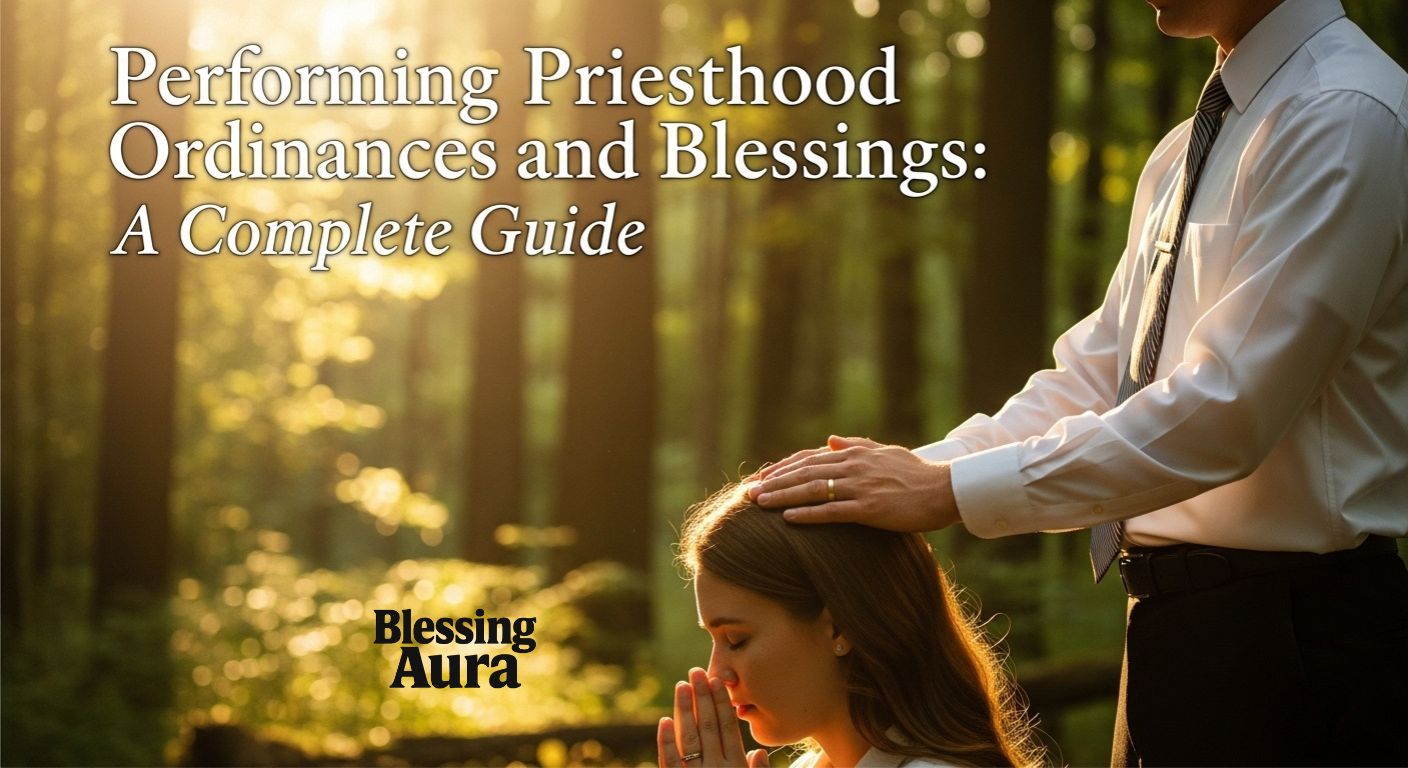
Performing Priesthood Ordinances and Blessings is a sacred responsibility given through priesthood authority. These acts are more than rituals; they are spiritual connections between God and His children. Through them, members enter into sacred covenants with God and receive strength, healing, and guidance. The path of discipleship includes ordinances of salvation and exaltation such as baptism, confirmation, and temple ordinances. Other blessings, like administering to the sick, bring comfort in times of trial. Each ordinance is performed by the authority of the priesthood and guided by the Spirit. When done with faith, they invite peace, protect families, and prepare individuals for eternal life.
Understanding the Purpose of Priesthood Ordinances and Blessings
The purpose of ordinances is to help us make sacred covenants with God. Through them, we promise obedience, and God promises blessings. The ordinances of salvation and exaltation include baptism, confirmation and gift of the Holy Ghost, the conferral of the Melchizedek Priesthood, and sacred temple rituals. These are essential for exaltation.
Other ordinances such as setting apart, administering to the sick, father’s blessing, and dedicating homes bring comfort, peace, and strength. Even blessings for the sick or a child’s name are performed by the authority of the priesthood. Each one is a visible reminder of God’s love and His power to heal, guide, and protect.
Scriptural Foundations of Priesthood Authority
Priesthood authority is rooted in scripture. In Doctrine and Covenants 84:20, we learn that in the ordinances “the power of godliness is manifest.” The Savior gave His apostles authority to act in the name of Jesus Christ, and that power has been restored. These scriptures show that ordinances are more than rituals; they are channels of divine power.
The early church established patterns for laying on of hands, blessing children, and conferring the priesthood. These same patterns exist today. The restored church continues them under the direction of a presiding leader / bishop / stake president, ensuring each ordinance is done properly and with priesthood authority.
Worthiness and Preparation to Perform Ordinances
Before taking part in any ordinance, worthiness matters. Leaders often use the temple recommend worthiness standard. This means a priesthood holder must live cleanly and faithfully. If someone is not fully worthy, leaders may still allow fathers to bless their children in certain cases.
Preparation includes prayer, humility, and obedience. A priesthood holder should study scriptures, seek guidance from leaders, and act with reverence. These simple steps help ensure ordinances are not routine but filled with the Spirit. This strengthens both the giver and the receiver.
How to Perform the Ordinance of Baptism
Baptism is the first saving ordinance. It is always performed by the authority of the priesthood and done by immersion. The one baptizing uses exact words and must be a priest or higher. Two witnesses make sure the ordinance is valid.
There are two main cases: children of record and baptism for converts. For children, the bishop gives approval. For converts, a mission president holds the priesthood keys. Baptism is followed by confirmation and gift of the Holy Ghost, making both ordinances vital for entering the covenant path.
Administering the Sacrament with Reverence
The sacrament is a weekly ordinance of renewal. Those with the Aaronic Priesthood bless and pass the bread and water. They recite exact prayers from Doctrine and Covenants 20. Each prayer is performed by the authority of the priesthood and focuses on Christ’s sacrifice.
Reverence is essential. A presiding leader ensures the meeting remains focused on Christ. The sacrament is not casual—it is holy. By partaking worthily, members renew their baptismal covenant and receive forgiveness.
The Ordinance of Confirmation and the Gift of the Holy Ghost
Confirmation happens after baptism. It is done through the laying on of hands by Melchizedek Priesthood holders. They speak words of confirmation and gift of the Holy Ghost, offering comfort and guidance to the new member.
This is usually done in a priesthood circle where men gather with their hands placed lightly on the person’s head. One priesthood holder is acting as voice in a blessing, while others support with faith. This moment fills the convert with peace and spiritual direction.
Performing Priesthood Blessings of Comfort and Healing
Blessings are powerful. They can heal the sick, give comfort, or provide direction. Often, anointing and administering to the sick is done first with consecration of oil, then another seals the blessing. This pattern follows scripture and modern practice.
Other blessings don’t require oil. A father may give a father’s blessing to his children for school, missions, or life decisions. Leaders may also offer blessings of comfort to those who struggle. Each is performed by the authority of the priesthood with faith.
Ordinances for the Sick, the Afflicted, and the Needy
Ordinances reach those who are weak or burdened. The sick may receive a blessing, the grieving may receive peace at dedicating graves, and families find hope when dedicating homes. These ordinances are simple but deeply meaningful.
Here is a quick overview of ordinances and their purposes:
| Ordinance | Purpose | Who Performs It |
| Administering to the sick | Healing and comfort | Priesthood holders |
| Dedicating homes | Peace and protection | Melchizedek Priesthood |
| Dedicating graves | Comfort and honor | Presiding priesthood leader |
| Patriarchal blessings by ordained patriarchs | Life guidance | Ordained patriarch |
Guidelines for Setting Apart and Ordaining to Offices
Ordination follows the ordination to an office in either the Aaronic or Melchizedek Priesthood. Each is performed by the authority of the priesthood and requires approval from a presiding leader.
During these events, a circle of priesthood holders gathers with hands placed lightly on the person’s head. One is acting as a voice in a blessing and confers the priesthood or calling. These acts help build the Church and prepare members for service.
Strengthening Faith Through Priesthood Ordinances and Blessings
Faith grows when ordinances are received with the Spirit. Members feel God’s love during patriarchal blessings by ordained patriarchs, a baptism, or even a father’s blessing. Every ordinance invites the Spirit and strengthens testimony.
Families also find strength. For example, naming and blessing children during fast and testimony meetings unites family and ward. And when a child dies before age 8, they are saved in the celestial kingdom before age 8, showing God’s mercy and the power of the Atonement.
FAQ’s
What is the meaning of Performing Priesthood Ordinances and Blessings?
Performing Priesthood Ordinances and Blessings means carrying out sacred acts with priesthood authority. They connect people to God’s power and bring comfort, healing, and spiritual growth.
Who can take part in Performing Priesthood Ordinances and Blessings?
Only worthy priesthood holders with proper authority can take part in Performing Priesthood Ordinances and Blessings. They act under guidance of presiding leaders with priesthood keys.
How does baptism relate to Performing Priesthood Ordinances and Blessings?
Baptism is a key step in Performing Priesthood Ordinances and Blessings. It is performed by immersion, followed by confirmation and gift of the Holy Ghost.
Why does the Church focus on Performing Priesthood Ordinances and Blessings?
The Church emphasizes Performing Priesthood Ordinances and Blessings because they bring sacred covenants with God. These ordinances provide strength, healing, guidance, and help members stay faithful.
What blessings come through Performing Priesthood Ordinances and Blessings?
Through Performing Priesthood Ordinances and Blessings, individuals receive healing, comfort, forgiveness, and guidance. They strengthen families, renew covenants, and open doors to salvation and exaltation.
Conclusion
Performing Priesthood Ordinances and Blessings is a sacred duty. It brings people closer to God and strengthens families. When we practice Performing Priesthood Ordinances and Blessings, we follow Christ. These sacred acts help us stay faithful and give comfort, healing, and peace. Performing Priesthood Ordinances and Blessings also remind us that God’s power works through His chosen servants. Every ordinance connects us to Him in a real and personal way.
Performing Priesthood Ordinances and Blessings is not only about rules. It is about faith, love, and guidance from heaven. Each time we take part in Performing Priesthood Ordinances and Blessings, we feel God’s Spirit. These acts bless the sick, comfort the weary, and prepare us for eternal life. Performing Priesthood Ordinances and Blessings truly carry heaven’s power to earth and bring lasting joy to all who receive them.
Welcome to Blessing Aura! I’m Muhammad Anas, an Digital Marketer and Ebay Dropshipping Expert with 1 year of experience, I help business, brands and store to grow online. My goal is to run ads and sell effective products for everyone, Let’s achieve more together!