
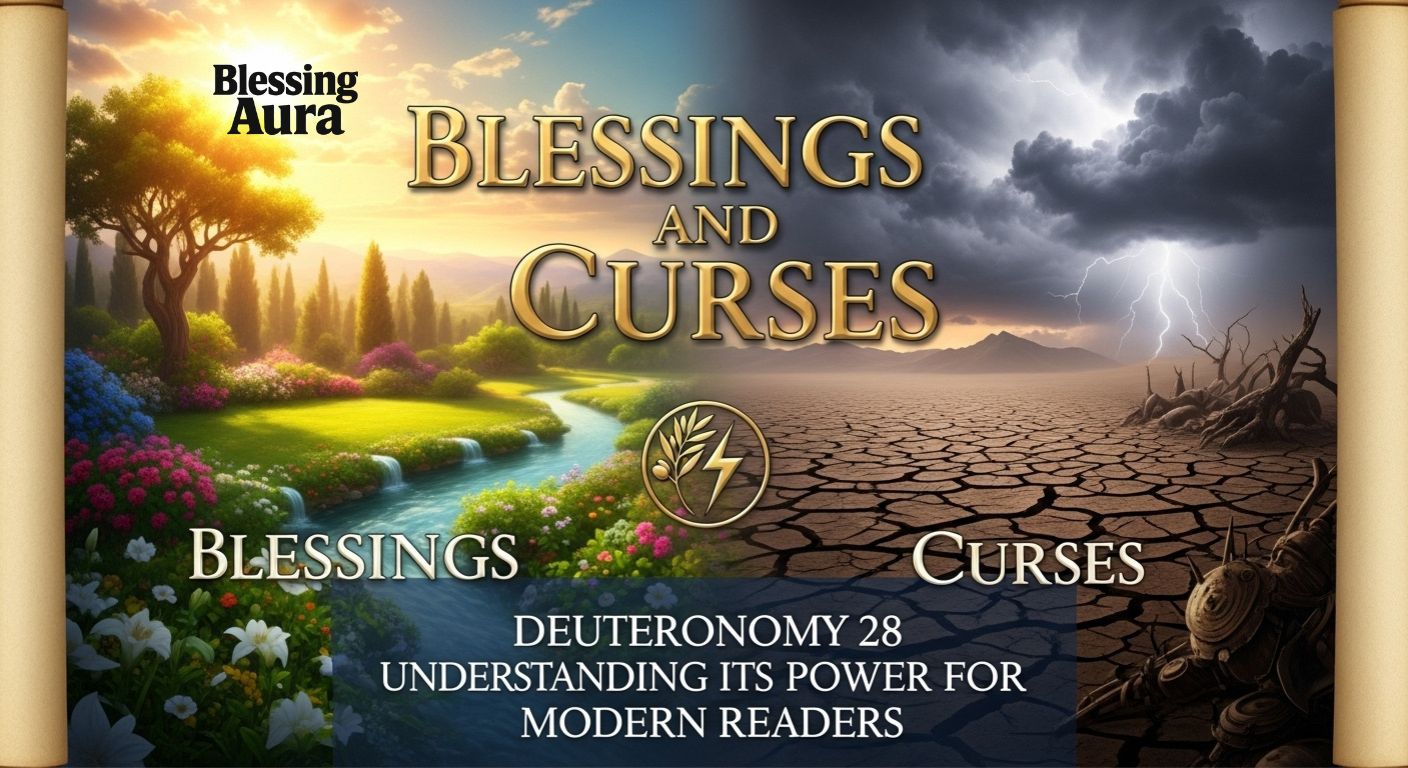
What Are the Blessings and Curses in Deuteronomy 28?
When you open Deuteronomy 28, you step into one of the most vivid chapters in the Bible, a chapter that draws a sharp line between Blessings and Curses: Deuteronomy and invites the reader to understand how deeply obedience and disobedience shaped the destiny of the Children of Israel. This chapter sits at the heart of the Mosaic Law, and it reveals how God’s commandments formed a living contract that tied the people to the Covenant God made through Moses. In many ways, this ancient text becomes a window into Israel’s history, showing how their journey toward the Promised Land demanded something far deeper than ritual. It required loyalty that touched every part of their lives. People today still look at the long lists of biblical blessings and biblical curses with wonder because they highlight consequences that were physical, emotional, spiritual, and national all at once.
If you’ve ever wondered why the Old Testament sometimes feels intense, this chapter explains it. The people weren’t simply moving into new territory. They were stepping into a covenant relationship with God, and the stakes were high. The chapter blends law, promise, warning, and hope into one single message. This is also why many modern Christians consider this a key chapter for understanding Old Testament relevance, biblical theology, and how God’s dealings with ancient Israel set the foundation for the New Testament story to come. When people today read this chapter, they often notice how strongly it echoes themes seen later in the Gospels, because the biblical writers show remarkable biblical narrative continuity from Deuteronomy into the teachings of Jesus. The chapter becomes a powerful example of how scripture interpretation requires reading the Bible as one unified story rather than isolated parts.
Understanding the Blessings in Deuteronomy 28
The first part of Deuteronomy 28 paints a picture of flourishing if Israel practiced covenant obedience. These blessings for obedience touched real areas of life like crops, families, safety, and income. The text describes a land flowing with milk and honey, full barns, overflowing grapes and winepresses, and peace from surrounding nations. This wasn’t poetic exaggeration. It was God’s way of showing what life under His care could look like. These blessings demonstrated how divine favor touched the ground the people walked on, the rain falling on their fields, and the children growing in their homes. When the chapter says Israel would be “the head and not the tail,” it meant strength, stability, and honor among nations. Modern readers in the USA often relate to this because the promise of prosperity, peace, and stability still speaks to the longings of every community and nation.
Another important detail is how the blessings weren’t random rewards. They revealed God’s heart and His desire to elevate His people as a testimony to the world. People sometimes forget that these blessings flow from love, not control. The chapter invites us to see how God designed blessings to reflect His character, not to create spiritual pressure. When you compare this section with stories such as the Genesis creation narrative or the Ten Commandments, you notice how God consistently builds systems that support life, order, and protection. These blessings were living examples of spiritual lessons from Israel, lessons that still help Christians understand the nature of divine generosity. Even modern believers can sense how these promises foreshadow New Testament fulfillment, showing how God ultimately works through grace. This is especially powerful when you look at how Jesus later expands the meaning of blessing, making it spiritual and eternal rather than just material.
Key Themes in the Blessings (Prosperity, Protection, Provision)
The blessings reach beyond crops and weather. They highlight themes like provision, favor, and divine covering, and they help readers see that God understood every human need. This becomes clearer when we consider how the ancient Israelites lived in a land shaped by farming, seasons, and war. Their peace depended on God’s protection. Their food depended on His rain. Their families depended on His watchful care. These themes show how prosperity in Scripture isn’t just monetary. It includes emotional, social, and communal well-being. People sometimes think biblical prosperity is limited to wealth, but the chapter reveals a deeper truth. Prosperity was a life lived in right order, grounded in God’s presence.
This section also becomes more meaningful when read alongside the Passover symbolism, the Sacrifice of Isaac (Akedah), and the story of Abraham and Isaac, because each of these moments helps explain how blessing always had a purpose. God intended Israel to shine as an example. That’s why later Christian teachers love showing how this chapter anticipates Jesus as fulfillment of prophecy. You can even see hints of typology in scripture, where Old Testament stories point toward future Gospel truths. When we read all of this together, the blessings in Deuteronomy 28 become a portrait of what life can look like when people embrace God’s guidance with full trust.
Exploring the Curses in Deuteronomy 28
After describing rich blessings, the chapter shifts sharply toward the curses for disobedience, and this part is much longer. Instead of abundance, the people would see loss, fear, famine, disease, and eventual ruin if they rejected God’s ways. This wasn’t divine cruelty. These covenant curses reflected what happens when people turn away from their source of protection. Imagine a nation losing crops, losing peace, losing identity, and losing hope all at the same time. Ancient Israel faced that when they broke faith, and the chapter traces how their struggles would escalate until the scattering of Israel across foreign lands. History shows this eventually happened, proving how closely the chapter aligns with Israel’s history.
Readers in the USA often find the curse section challenging, but it becomes clearer when you understand the covenant structure of the Old Testament. God wasn’t surprised by human choices. He warned the people because He knew the consequences of turning away. When people today read this section, they sometimes picture an angry God, but the deeper message shows a grieving God who understood that rebellion creates chaos. This is why the curses describe events touching health, economy, family, and national identity. The curses paint a picture of a people trying to live without God and discovering how quickly things fall apart. When compared to modern ideas about heaven and hell, eternal rewards and punishment, or Christian doctrine, these curses show how ancient spiritual truth still speaks to modern ethical choices.
How the Blessings and Curses of Deuteronomy 28 Connect to the New Testament
Many Christians in the USA read Deuteronomy 28 with new appreciation when they study how it connects to the New Testament. The chapter’s message about consequence, faithfulness, and divine relationship sets the stage for the coming of Jesus, who brought a new covenant founded on grace. When Jesus teaches about the Kingdom of God, His words often echo themes from Deuteronomy. He speaks of blessing, obedience, and relationship, but He transforms them into spiritual realities. The blessings are no longer tied to land or crops. Instead, they point toward inner transformation and eternal hope.
This connection becomes more powerful when you examine how the New Testament writers used Old Testament ideas. Consider how the apostles interpreted law, curse, and blessing. Paul explains that Jesus carried the curse of the law so believers could receive the blessing of salvation. This doesn’t erase Old Testament relevance; it fulfills it. Christian writers often explore how the gospel reframes blessing, shifting focus from land-based reward to spiritual renewal. When readers understand this link, they see how deeply the Bible’s two halves support each other. Themes like grace, obedience, judgment, and restoration unite the Testaments and reveal how God’s plan stretches across centuries with remarkable biblical narrative continuity.
Why American Christians Should Still Read Deuteronomy 28
Many people wonder why modern believers should spend time reading a chapter about ancient blessings and curses. The answer lies in how Christianity’s Jewish roots shape understanding of faith. When Americans study this chapter, they connect to a heritage that formed Jesus, the apostles, and the earliest churches. Understanding Israel’s journey helps Christians understand their own. This is why the story of the Ethiopian eunuch studying the Book of Isaiah or why Jesus quoting scripture from the Old Testament in the Gospels carries such weight.
Another reason American Christians gain value from Deuteronomy 28 is its honesty about human nature. The chapter shows how easily people forget their blessings, how quickly they drift from commitments, and how important remembering God is for long-term well-being. The ancient Israelites were often described as stubborn people, and this description feels familiar to many readers today. The chapter becomes a spiritual mirror that helps believers examine their own choices, attitudes, and loyalties. It teaches that faith is not just tradition; it’s a relationship that shapes identity and purpose.
Blessings and Curses: Deuteronomy 28 in Today’s Culture
Modern culture sometimes uses biblical texts for political arguments, and Deuteronomy 28 is no exception. Some think the blessings apply to their nation or that curses predict modern disasters. While these interpretations can feel dramatic, they often miss the deeper spiritual message. The chapter was written for a specific covenant with ancient Israel, not as a prophecy for modern governments. Its principles can guide individuals and communities, but they should be read through the lens of faith, not politics. This is why good scripture interpretation avoids turning ancient promises into national slogans.
In the USA, people sometimes view blessing as wealth and success, and they see curses as misfortune or failure. This view can lead to a shallow understanding of the text. The chapter isn’t about quick reward or punishment. It’s about relationship. It’s about what happens when people walk with God or walk away from Him. When read responsibly, the chapter challenges modern culture to think about moral direction, compassion, justice, and spiritual priorities. It also asks readers to consider whether their values align with God’s heart. In this way, the ancient text becomes a relevant guide for modern life.
Theological Takeaways from Deuteronomy 28
People learn an important truth when they read this chapter closely. Blessing is more than good circumstances, and curse is more than hardship. These words point to the result of relationship choices. For ancient Israel, obeying God brought harmony and stability. Rejecting Him brought confusion and collapse. Modern believers can still see how these spiritual patterns show up in daily life. People who follow God’s guidance often experience clarity, purpose, and strength, while those who ignore it sometimes face unnecessary struggles.
This insight becomes even richer when compared to the messages of Jesus. He teaches that obedience comes from love, not fear, and that spiritual blessing surpasses material gain. He shifts the conversation to eternal realities like salvation, forgiveness, and transformation, which connect to the deeper meaning behind Deuteronomy 28. The chapter invites Christians to examine their motives and align their faith with the heart of God. It also shows how the Bible creates a unified message across books, cultures, and centuries.
Comparing Ancient Covenants and Christian Covenant (Grace vs. Law)
One of the most important lessons for readers today is understanding the difference between the old covenant and the new covenant. The blessings and curses of Deuteronomy 28 were part of a national covenant with ancient Israel. They depended on law-keeping and community obedience. The New Testament shift to grace changes how believers live. Instead of earning blessing, Christians receive it through Christ. This doesn’t remove responsibility, but it transforms the foundation. Obedience becomes a response to love rather than a requirement for survival.
This change helps readers understand how Jesus redefined blessing and curse. He took the curse on Himself during the cross and opened the door for believers to share in spiritual blessing. This is why Christian teachers often emphasize how grace builds on the law rather than erasing it. The Old Testament becomes a teacher, showing why humanity needs redemption. The New Testament becomes the fulfillment, showing how redemption is offered. Together, they reveal how God’s plan unfolds from creation to eternity.
Common Misinterpretations of Deuteronomy 28
People sometimes misuse this chapter by linking it to prosperity teachings or claiming its promises for modern nations. These interpretations misunderstand the text’s context and purpose. Deuteronomy 28 was written for a specific people at a specific time under a specific covenant. While its principles remain meaningful, its promises cannot be transferred directly. This is why careful reading matters. It protects believers from confusion and helps them honor the original message.
Another misunderstanding occurs when people treat curses as generational magic or unavoidable patterns. The Bible teaches that people can break harmful cycles through faith, repentance, and community. Jesus’s teachings show that freedom is possible, and that the gospel transforms identity. The chapter becomes more encouraging when read in this light. Instead of fear, it inspires hope as part of a larger story of redemption.
Blessings and Curses in the Broader Biblical Narrative
The themes of Deuteronomy 28 echo throughout the Bible. Prophets like Jeremiah and Ezekiel warn Israel about disobedience, and the historical books describe how the nation experienced exile as predicted in the curses. Yet the Bible also tells a story of restoration, hope, and return. This pattern shows how God’s justice and mercy work together. The Old Testament reveals the consequence of sin, and the New Testament reveals the gift of grace.
This connection becomes clearer when considering events like the Last Supper, which carries deep Passover meaning. Jesus used ancient rituals to reveal new spiritual truths. He redefined blessing through sacrifice and service. The gospel message takes the old themes of land, nation, and covenant and expands them into universal truths about salvation. The story becomes global, reaching readers in every nation, including the USA.
Lessons for the American Church From Deuteronomy 28
The American church can gain wisdom from this chapter by remembering that blessing carries responsibility. It’s easy for any nation or community to become proud, forget its foundations, or ignore spiritual priorities. Deuteronomy 28 warns against these patterns through the history of Israel. It encourages humility, reflection, and a return to core values like compassion, justice, and devotion.
Readers in the USA can apply these lessons by examining their own lives and communities. The chapter calls believers to walk with God in daily choices, relationships, and attitudes. It reminds them that faith is not tradition but transformation. When the American church listens to these lessons, it becomes stronger, more grounded, and more aligned with God’s heart.
What Deuteronomy 28 Ultimately Teaches Us
When people step back and look at the entire chapter, they discover a message that reaches across time. Deuteronomy 28 shows how deeply God cares about human choices and how He invites people into relationships. The blessings reveal His desire to give life, hope, and peace. The curses reveal what happens when people walk away from their source. The chapter stands as a reminder that obedience brings harmony and disobedience brings struggle.
For modern readers in the USA, this chapter isn’t about predicting national events. It’s about examining personal faith, understanding the heart of God, and embracing spiritual truth. When read alongside the New Testament, it points toward grace, restoration, and the promise of eternal life. The story that begins with Israel continues through Jesus and reaches every believer today. Deuteronomy 28 becomes more than history. It becomes a living guide for anyone seeking meaning, purpose, and a deeper relationship with God.
FAQ’s
How does Blessings and Curses: Deuteronomy shape a reader’s view of covenant trust?
Blessings and Curses: Deuteronomy shows how trust grows when people follow God with steady hearts, and it reveals how faith deepens when choices match divine direction.
Readers learn that Blessings and Curses: Deuteronomy presents a clear pattern of response, guiding them to see how loyalty invites peace while turning away creates struggle within the covenant path.
What does Blessings and Curses: Deuteronomy reveal about the Children of Israel’s spiritual journey?
Blessings and Curses: Deuteronomy displays the Children of Israel learning through trials, victories, warnings, and new beginnings as they moved toward the land promised to their ancestors.
Through these scenes, Blessings and Curses: Deuteronomy helps readers notice how their progress rises or falls depending on obedience, courage, and their connection to God’s steady presence.
How can Blessings and Curses: Deuteronomy guide someone trying to understand Old Testament themes?
Blessings and Curses: Deuteronomy becomes a doorway into Old Testament patterns where choices shape outcomes, and where God teaches through mercy, correction, promise, and direction.
Anyone exploring these themes sees that Blessings and Curses: Deuteronomy gathers many threads, helping them follow the movement of covenant truth from early commands to later renewal.
What does Blessings and Curses: Deuteronomy teach about stepping into the Promised Land with confidence?
Blessings and Curses: Deuteronomy highlights how confidence grows when people walk forward with clear hearts, steady minds, and willingness to follow God beyond fear.
Readers discover that Blessings and Curses: Deuteronomy shows the Promised Land opening for those who choose faith, proving that courage rises when trust replaces hesitation.
How does Blessings and Curses: Deuteronomy help someone reflect on personal choices today?
Blessings and Curses: Deuteronomy brings ancient stories into present thinking by showing how every decision plants seeds that echo through one’s path.
It encourages readers to pause and see how Blessings and Curses: Deuteronomy still speaks, urging wise steps that build peace, strength, and direction in modern challenges.
Conclusion
The message of Blessings and Curses: Deuteronomy still speaks with clear strength. It shows how choices shape a path, and how faith brings steady peace. When you read Blessings and Curses: Deuteronomy, you see how God guides people with patience and truth. The lessons feel simple, yet they reach deep places in the heart. That is why Blessings and Curses: Deuteronomy remains a strong guide for anyone who wants honest direction.
You also see how Blessings and Curses: Deuteronomy invites you to reflect on your own steps. Each teaching pushes you toward steady trust. Each warning leads you to better decisions. When you return to Blessings and Curses: Deuteronomy, you find courage to walk forward with hope. You feel the call to choose wisdom. You recognize how Blessings and Curses: Deuteronomy brings clarity for today and tomorrow.

Welcome to Blessing Aura! I’m Muhammad Anas, an Digital Marketer and Ebay Dropshipping Expert with 1 year of experience, I help business, brands and store to grow online. My goal is to run ads and sell effective products for everyone, Let’s achieve more together!